
Every generation of AI hardware has one name that everyone talks about. In 2024 it was Blackwell. In the fall of 2026 it is Vera Rubin, NVIDIA's next platform for AI data centers, and it has moved from keynote slides to real racks.
On May 31, NVIDIA said that Vera Rubin was "ramping into full production" and that production shipments would begin this fall. Its results for the second quarter of fiscal 2027, published on August 26, went further: Vera Rubin is "now in full production," with racks running at partners including CoreWeave, Google Cloud, Microsoft Azure, Oracle Cloud Infrastructure, and Nebius. NVIDIA's product page for the platform now reads "Available Now."
Here is what Vera Rubin is, what NVIDIA claims for it, and why it matters even if you never set foot in a data center.
A platform, not just a GPU
The name honors Vera Rubin, the American astronomer whose measurements of how galaxies rotate gave some of the strongest evidence for dark matter. NVIDIA names its architectures after scientists, and this one covers far more than a single chip.
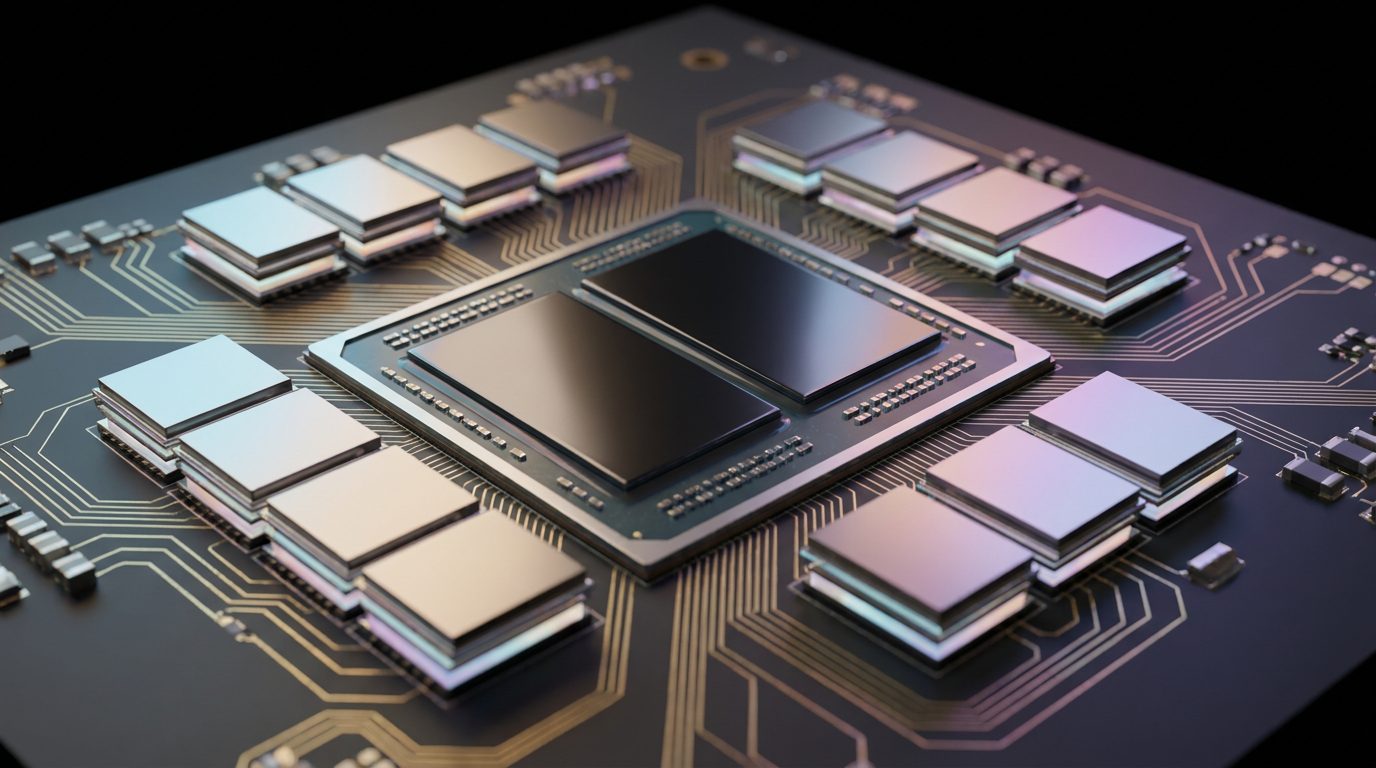
Vera Rubin is a set of chips designed to work as one machine:
- Rubin GPU, the accelerator that runs the models, with HBM4 memory.
- Vera CPU, NVIDIA's own Arm-based processor with custom Olympus cores.
- NVLink 6 Switch, which ties 72 GPUs together so they act as one.
- ConnectX-9 SuperNIC and BlueField-4 DPU, for networking, storage, and security.
- Spectrum-6 Ethernet switches, which link racks into larger clusters.
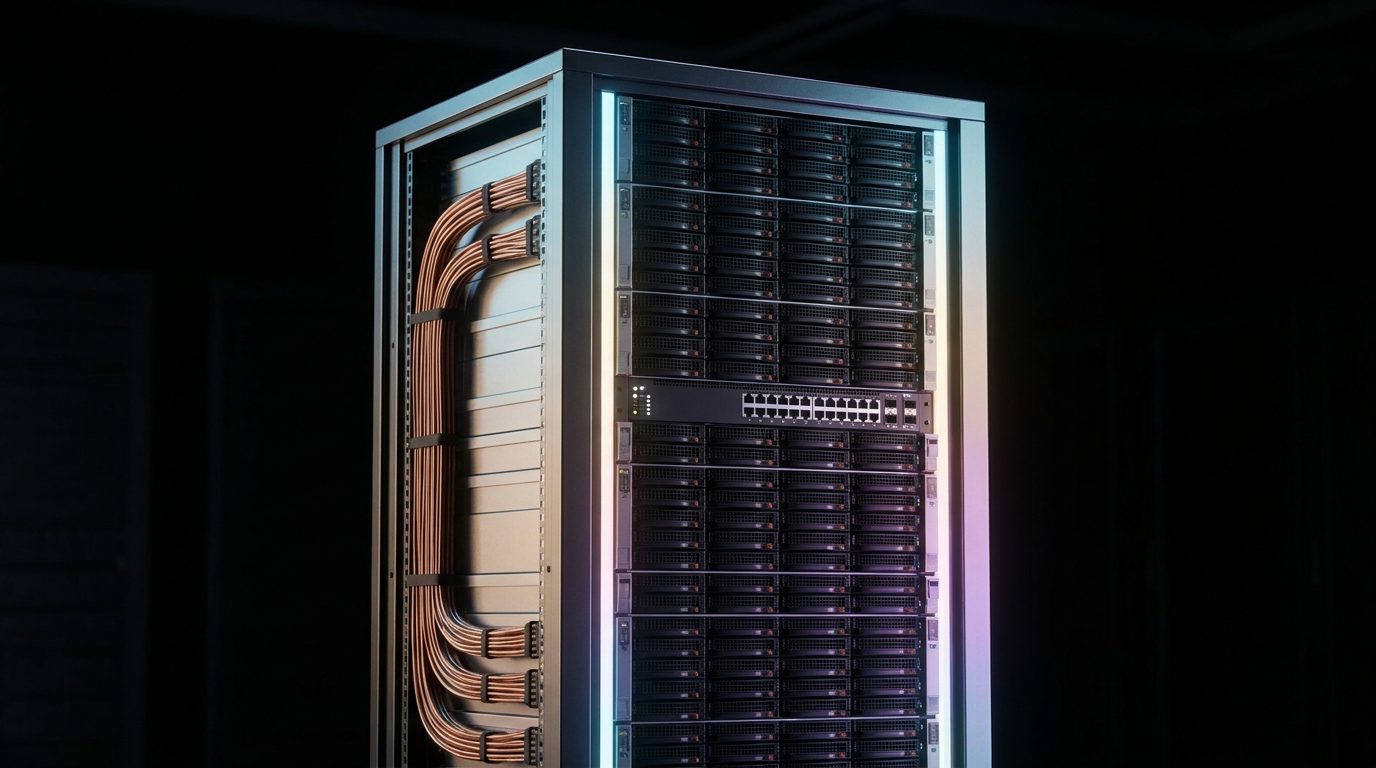
The flagship system is the Vera Rubin NVL72: one rack with 72 Rubin GPUs and 36 Vera CPUs, connected so tightly that software can treat the whole rack as one giant accelerator.
The numbers
These figures come from NVIDIA's page for the Vera Rubin NVL72, checked on October 19, 2026. NVFP4 is NVIDIA's 4-bit number format for AI; NVIDIA lists the inference figures with sparsity and the training figures without.
| One Rubin GPU | One NVL72 rack | |
|---|---|---|
| NVFP4 inference | 50 petaflops | 3,600 petaflops |
| NVFP4 training | 35 petaflops | 2,520 petaflops |
| HBM4 memory | 288 GB | 20.7 TB |
| Memory bandwidth | 19.2 TB/s | 1,400 TB/s |
| NVLink bandwidth | 3 TB/s | 216 TB/s |
Next to the GPUs, each rack carries 3,168 CPU cores and up to 54 TB of LPDDR5X memory.
What NVIDIA claims against Blackwell
NVIDIA compares the Vera Rubin NVL72 with the GB200 NVL72, its Blackwell rack. It says that Vera Rubin:
- delivers one-tenth the cost per million tokens for inference,
- produces up to 10 times more tokens per megawatt of power,
- trains mixture-of-experts models with one-fourth the number of GPUs.
These are the maker's own numbers, and independent results will follow as the clouds put the racks to work. Even part of that gain would be a big step for the cost of AI.
Why it matters
Most AI compute no longer goes into training models. It goes into running them. Every chat reply, every image, every video clip, and every step of an AI agent is a stream of tokens, and agents that plan, search, and call tools produce far more of them than a single prompt does.
That is the work Vera Rubin is built for. More memory per GPU fits larger models on fewer chips. More bandwidth keeps those chips busy instead of waiting on data. NVLink 6 lets 72 GPUs share one model without slow hops between machines. NVIDIA put the goal plainly in its May announcement: ten times the agent throughput of the Grace Blackwell platform at scale.
When the cost of a token falls, everything built on tokens gets cheaper to run: assistants, image and video models, voice, 3D, and the agents that tie them together.
Who gets it first
The first racks go where the demand and the power already are. NVIDIA names CoreWeave, Google Cloud, Microsoft Azure, Oracle Cloud Infrastructure, and Nebius as partners with racks running, and a long list of server makers, from Dell Technologies and HPE to Supermicro and Foxconn, are building systems around the platform.
For everyone else, the effect comes in waves. Each new generation has brought more compute at a lower cost per unit of work, first to the largest buyers and then to the rest of the market. Vera Rubin starts that cycle again, at a larger scale than any generation before it.
Meanwhile, on the desktop
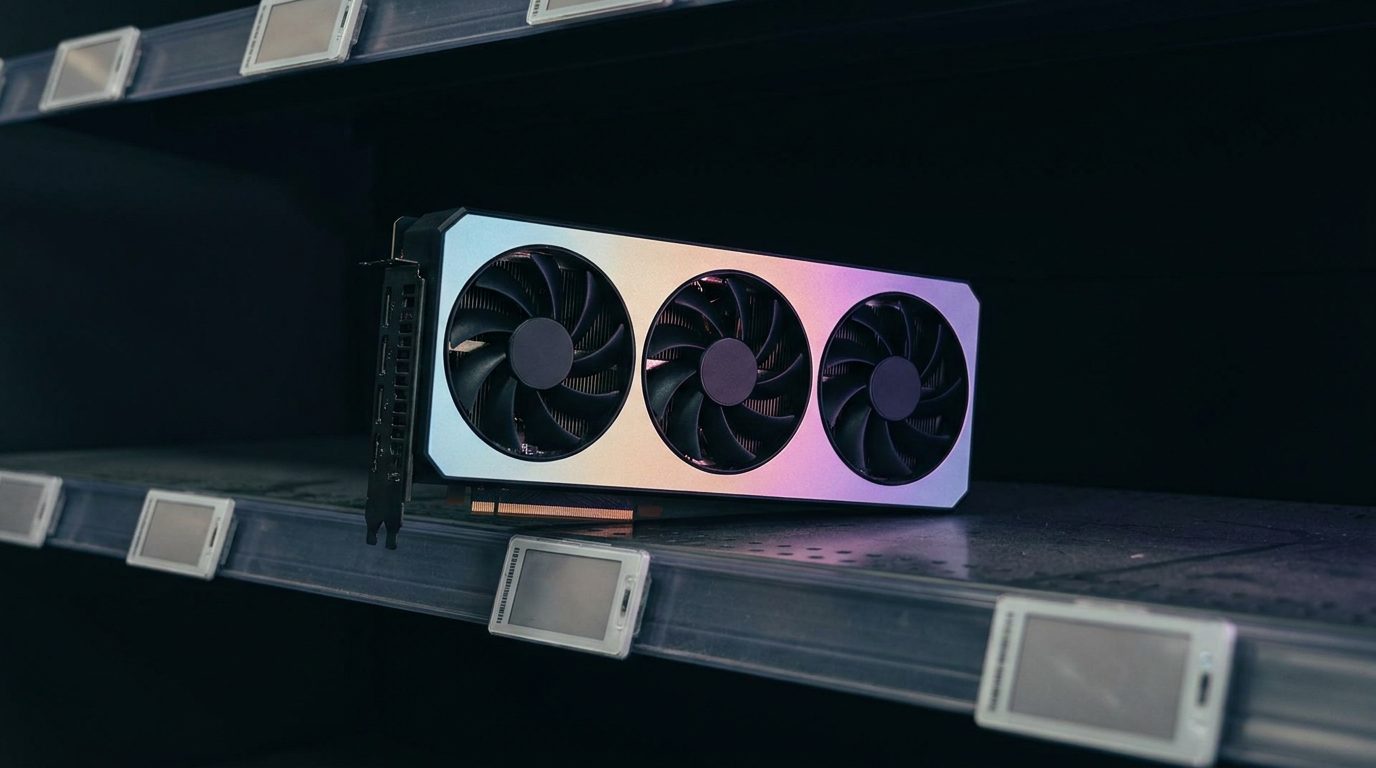
Consumer GPUs tell a different story this month. Micro Center, a large US retailer, has labeled many GeForce RTX 5090 listings as "not carried." NVIDIA has not announced that the card is discontinued, but buying one off the shelf has become hard.
For most people who need that kind of power for a few hours, renting a GPU is the practical route: pay for the time you use, and give the GPU back when the job is done.
Where Texel fits
Texel is building the onchain GPU cloud on Robinhood Chain: ready AI models for images, video, voice, and 3D, paid per output, and whole GPUs rented by the second, all paid in USDG. Hardware like Vera Rubin keeps pushing the cost of compute down, and our job is to turn that into simple prices per output and per second.
We will keep writing about the hardware that moves AI forward, right here on the blog.
Sources
- NVIDIA, NVIDIA Vera Rubin Ramps Into Full Production to Power Agentic AI Factories Worldwide, May 31, 2026.
- NVIDIA, NVIDIA Announces Financial Results for Second Quarter Fiscal 2027, August 26, 2026.
- NVIDIA, Vera Rubin NVL72, product page, checked October 19, 2026.
- Club386, Nvidia GeForce RTX 5090 discontinuation reports grow, as Micro Center lists cards as "not carried", October 15, 2026.